
As an Amazon Associate, I earn from qualifying purchases. This helps support the site at no additional cost to you.
The Ultimate Guide to Air Purifier for Cat Allergies: Breathe Easier Without Losing Your Best Friend
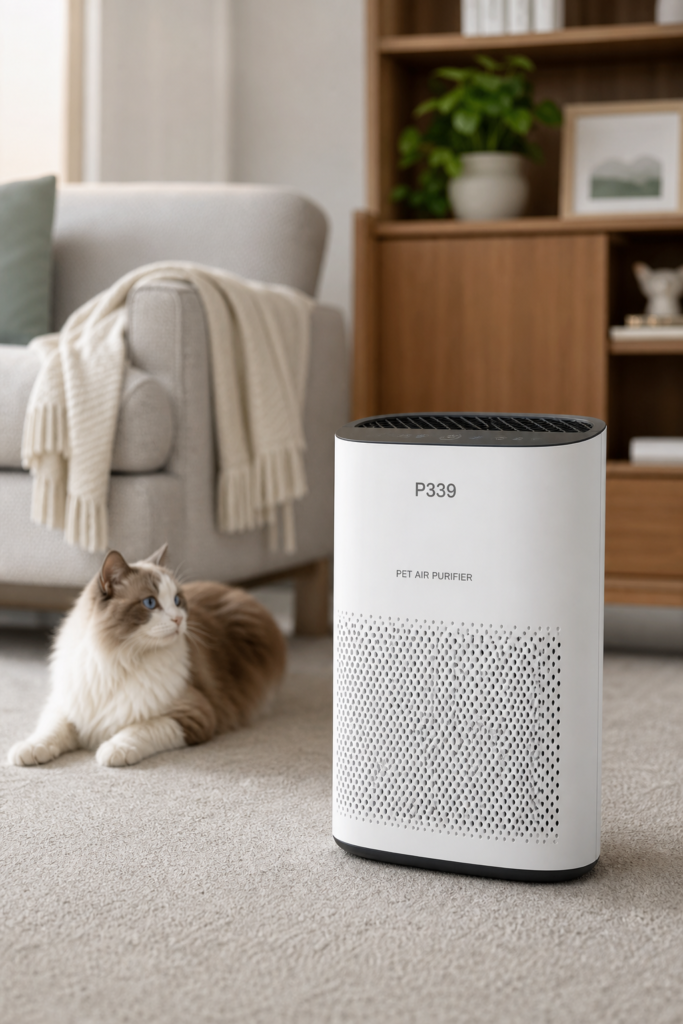
Yes, air purifiers—specifically those with True HEPA filters—can significantly reduce airborne cat allergens like dander and the Fel d 1 protein. For best results, choose a unit with a high CADR rating and use it in conjunction with other clean-home strategies. Air purifiers are a proven tool, but not a standalone cure.
Facing Cat Allergies Without Saying Goodbye
You love your cat.
But every sneeze, itchy eye, or wheezy breath is a reminder that cat allergies are more than a minor annoyance—they’re a daily battle waged inside your own home.
It’s easy to feel trapped.
On one hand, you can’t imagine life without your furry companion. On the other, relentless allergy symptoms can drain your joy and sap your energy. Asthma attacks, sinus infections, and chronic congestion are not the price you should pay for pet ownership.
The good news?
You don’t have to choose between your health and your best friend. Advances in air purification, combined with science-backed home strategies, mean you can dramatically reduce cat allergens at home—and breathe easy again.
The Science of Cat Allergies (It’s Not the Hair)
You may think your cat’s fur is the culprit. In reality, the real offenders are microscopic particles released from your cat’s skin, saliva, and urine.
Understanding the Fel d 1 Protein
- Fel d 1 is the primary protein responsible for cat allergies, according to the American Academy of Allergy, Asthma & Immunology (AAAAI).
- This protein is produced in cats’ sebaceous glands and saliva. When a cat grooms, Fel d 1 sticks to fur and skin, then becomes airborne as dander.
- Because Fel d 1 is so small (often 0.1 to 0.3 microns), it easily stays suspended in your home’s air.
Why Fel d 1 Matters:
Around 90% of people allergic to cats react to Fel d 1 specifically. Eliminating this allergen is crucial for real relief.
Why Cat Dander Stays Airborne So Long
- Cat dander refers to tiny skin flakes—about 2–3 microns—with the allergenic protein still attached.
- These particles are lightweight and sticky, easily attaching to soft surfaces and re-entering the air when disturbed.
- Indoor air currents (HVAC, fans, human movement) keep dander floating for hours, even after the cat has left the room.
Key Concept:
Because dander and Fel d 1 are so small, you need filtration that can capture particles as tiny as 0.1 microns. Standard filters aren’t enough.
Do Air Purifiers Actually Work for Cat Allergies?
Yes—when you choose the right type. Here’s how:
- True HEPA filters capture 99.97% of particles down to 0.3 microns. Many airborne allergens, including most dander and Fel d 1, fall in this range.
- High CADR (Clean Air Delivery Rate) ensures the purifier efficiently circulates and cleans the entire room.
- Activated carbon filters capture pet odors and volatile organic compounds (VOCs) from litter boxes and cleaning supplies.
According to the U.S. EPA and AAAAI, combining HEPA filtration with regular home cleaning can reduce airborne allergens by up to 80%.
What Air Purifiers Can’t Do:
- They don’t remove allergens already settled in bedding or carpets.
- They won’t “cure” your allergy, but can dramatically ease symptoms.
E-E-A-T Tip: Always choose purifiers labeled “True HEPA”—not “HEPA-like” or “HEPA-type”—for clinically proven results.
5 Must-Have Features in an Air Purifier for Pet Owners
Knowing what to look for is half the battle. These features ensure your air purifier stands up to the challenge of cat allergens.
True HEPA Filters (Not “HEPA-type”)
- True HEPA guarantees capture of 99.97% of particles down to 0.3 microns.
- Only “True HEPA” is standardized; “HEPA-type” or “HEPA-like” are unregulated and may miss the smallest allergy triggers.
High CADR Rating for Pollen and Smoke
- CADR (Clean Air Delivery Rate): Measures how well a purifier removes smoke (the smallest particles), pollen, and dust.
- For cat allergies, higher smoke CADR is especially important—aim for at least 200+ for medium-size rooms.
Activated Carbon Filters for Pet Odors
- Cats bring more than dander—urine odors and litter box fumes can make allergies worse.
- Activated carbon absorbs VOCs and pet odors that HEPA filters don’t catch.
Proper Room Sizing and ACH (Air Changes Per Hour)
- ACH tells you how many times per hour the purifier cleans the air in a room.
- For allergy relief, look for a unit that provides at least 4–5 ACH in your room size.
- Sizing Example:
- Small bedrooms (~150 sq ft): Moderate ACH required
- Living rooms (~400 sq ft): High ACH for best results
Avoid Ozone Generators (Dangers to Pets)
- Some purifiers use ozone or “ionizers” that claim to destroy allergens.
- Ozone is dangerous: Both AAAAI and EPA warn against ozone generators, especially in homes with pets or respiratory issues.
Types of Air Purifiers to Consider
Not all air purifiers are created equal. Here’s how to match the right type to your needs:
Comparison Table: Filter Types
| Feature/Type | True HEPA | Activated Carbon | Ionizer/Ozone |
|---|---|---|---|
| Particle Removal | Yes (0.3 microns) | No | Some |
| Odor/Gas Removal | No | Yes | No |
| Safe for Pets | Yes | Yes | No |
| Allergen Reduction | Excellent | Moderate | Inconsistent |
Best for Large Rooms
Top features:
- High CADR (300+ for smoke)
- Large HEPA filter surface area
- Multiple ACH settings
Example:
- Winix 5520: Renowned for performance and affordability
- Coway Airmega 400: Designed for spacious living areas
Best Budget
Top features:
- True HEPA certification
- Simple controls
- Replaceable filters
Example:
- Levoit Core 300: Compact, HEPA-certified, and accessible price
- Coway AP-1512HH Mighty: Strong CADR with affordable filter replacements
Best for Bedrooms
Top features:
- Whisper-quiet (<25 dB)
- Sleep mode (dimmable lights)
- Timer function
Example:
- Coway Mighty: Quiet and reliable
- Blueair Pure 511: Compact and silent for small rooms
Comprehensive Cat Allergy Management (Beyond Purifiers)
Even the best air purifier works better with supplemental strategies:
- Vacuum Frequently: Use a vacuum with a True HEPA filter; vacuum at least twice a week to remove settled dander.
- Wash Bedding and Soft Surfaces: Wash sheets, pillowcases, and throw blankets in hot water weekly.
- Groom Your Cat: Wipe your cat down with unscented grooming wipes and brush them regularly—ideally outside.
- Keep Cats Out of Bedrooms: Limit cat access to allergy sufferers’ sleeping areas for at least a portion of the day.
- Upgrade HVAC Filters: Use MERV-13 or better filters in your central HVAC system.
- Declutter: Fewer surfaces mean fewer places for dander to settle.
- Use Allergist-Recommended Medications: Safe antihistamines, nasal sprays, or allergy shots if symptoms persist.
Frequently Asked Questions
1. How long does it take for an air purifier to clear cat dander from a room?
Most high-quality air purifiers need 1–3 hours to significantly reduce airborne cat dander, depending on room size and ACH.
2. Do air purifiers completely eliminate cat allergies?
No, air purifiers greatly reduce airborne allergens but do not eliminate them entirely. Complement with regular cleaning for best results.
3. What is the best HEPA filter for pet dander?
A True HEPA filter is best, as it captures 99.97% of dander-sized particles. Look for certified models labeled “True HEPA.”
4. Does activated carbon help with cat allergies?
Activated carbon targets pet odors and VOCs but does not directly remove allergens like dander or Fel d 1.
5. Are ozone generators safe for homes with cats?
No. Ozone purifiers can cause respiratory harm to both humans and pets. Always avoid ozone-based devices.
6. Can I reduce cat dander without getting rid of my cat?
Yes. Combining air purifiers, regular grooming, and cleaning routines can drastically lower dander levels while keeping your cat.
7. What is the Fel d 1 protein and why is it important?
Fel d 1 is the major allergen in cat dander and saliva. It is the primary trigger for most cat allergy symptoms.
Conclusion
You don’t have to choose between your health and your cat.
Modern air purifiers—especially those with True HEPA filters and high CADR ratings—are scientifically proven to remove airborne cat allergens, letting you breathe easier while keeping your beloved feline at your side.
Remember:
Optimize your home by combining a quality air purifier with consistent cleaning and proven allergy-reduction methods. Consult your allergist for personalized advice, and trust that with the right tools and knowledge, you and your cat can thrive together.
Ready to reclaim your air—and keep your best friend? Invest in a certified air purifier and start building a healthier, happier home for you and your cat today.
